 1st Floor, Willowbridge Centre, Carl Cronje Drive, Tyger Valley



- MetCon Silver Kilobar
How To Authenticate a Gold Krugerrand and Spot Fakes

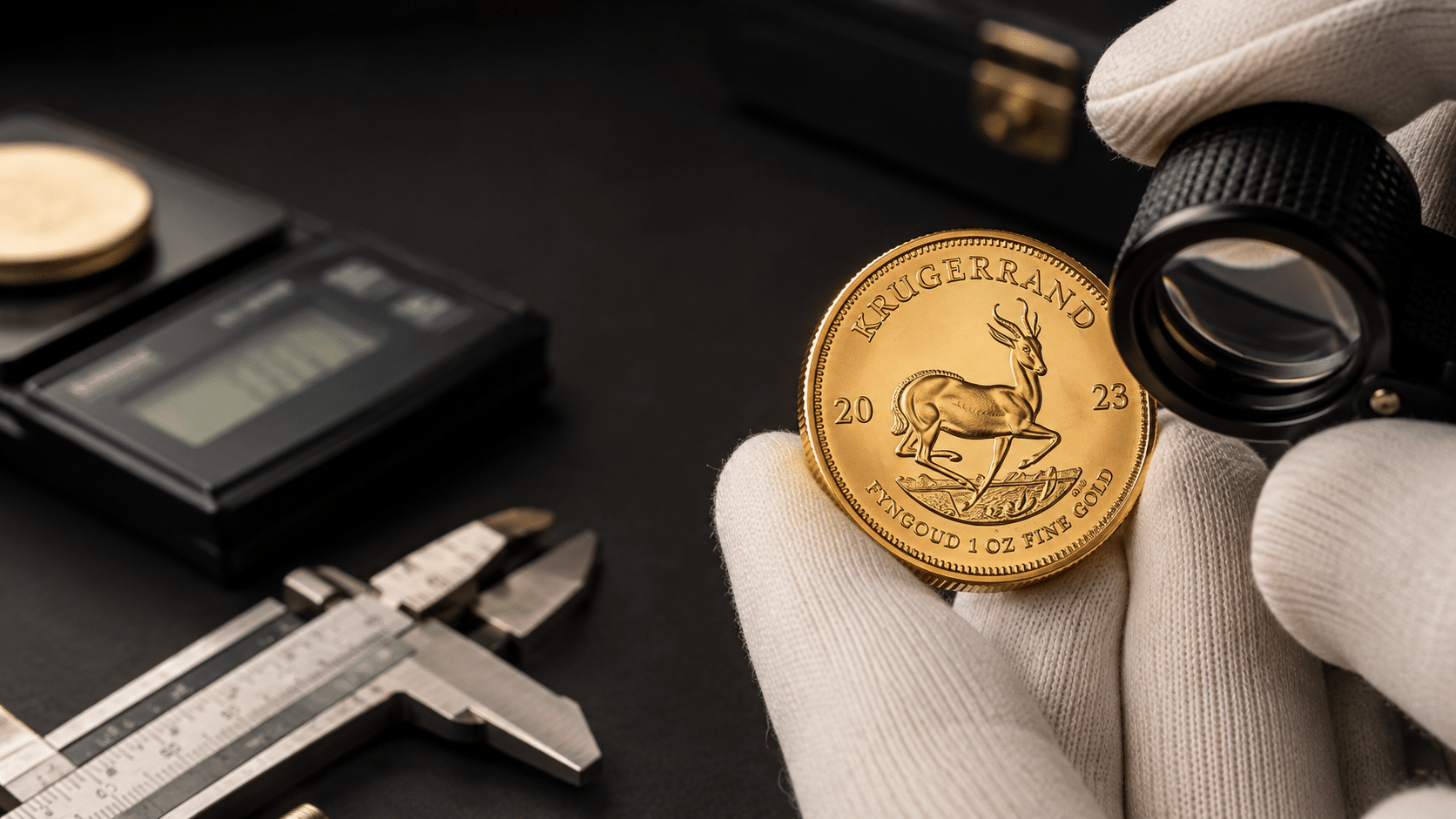
The Krugerrand is the world’s most famous gold bullion coin, and that popularity cuts both ways. It’s why counterfeiters target it, and why knowing how to authenticate one matters. It matters as much as knowing why to buy one.
Whether you are buying your first Krugerrand, have inherited a small collection, or plan to sell old coins, this guide will help you. It covers the official specs, key visual details, and simple physical tests. You will be able to tell a real 1 oz gold Krugerrand from a fake so you can buy, hold, and sell with confidence.
Why Krugerrand Authentication Matters
A genuine 1 oz gold Krugerrand is worth its full weight in gold, tracked against the live international spot price. A convincing fake is worth whatever the base metal inside it happens to be, often a small fraction of that. There’s no partial credit here. Either you’re holding real gold, or you’re not. The difference can reach tens of thousands of Rands.
That’s a real financial risk for anyone who buys, sells, or trades physical gold. That’s why authentication isn’t just for suspicious-looking coins. Even coins that look, feel, and weigh correctly at first glance deserve a proper check before money changes hands.
Knowing what to look for builds your confidence to buy from private sellers. It also helps you verify inherited coins. You can trade with peace of mind, not guesswork.
Why Krugerrands Are Targeted
The Krugerrand’s popularity is precisely what makes it a target. It’s the most recognized and most traded gold bullion coin in the world. It has been minted every year since 1967. This creates a large global secondary market. Many coin conditions are in circulation. That gives a well-made fake the perfect cover to blend in unnoticed.
Krugerrands also aren’t individually serialised or registered like banknotes or some modern investment coins. So there’s no central database to check a specific coin. Combine that with high value in a small, easy-to-hide package and broad buyer familiarity with less scrutiny at resale. It is easy to see why the Krugerrand remains the gold coin counterfeiters prefer.
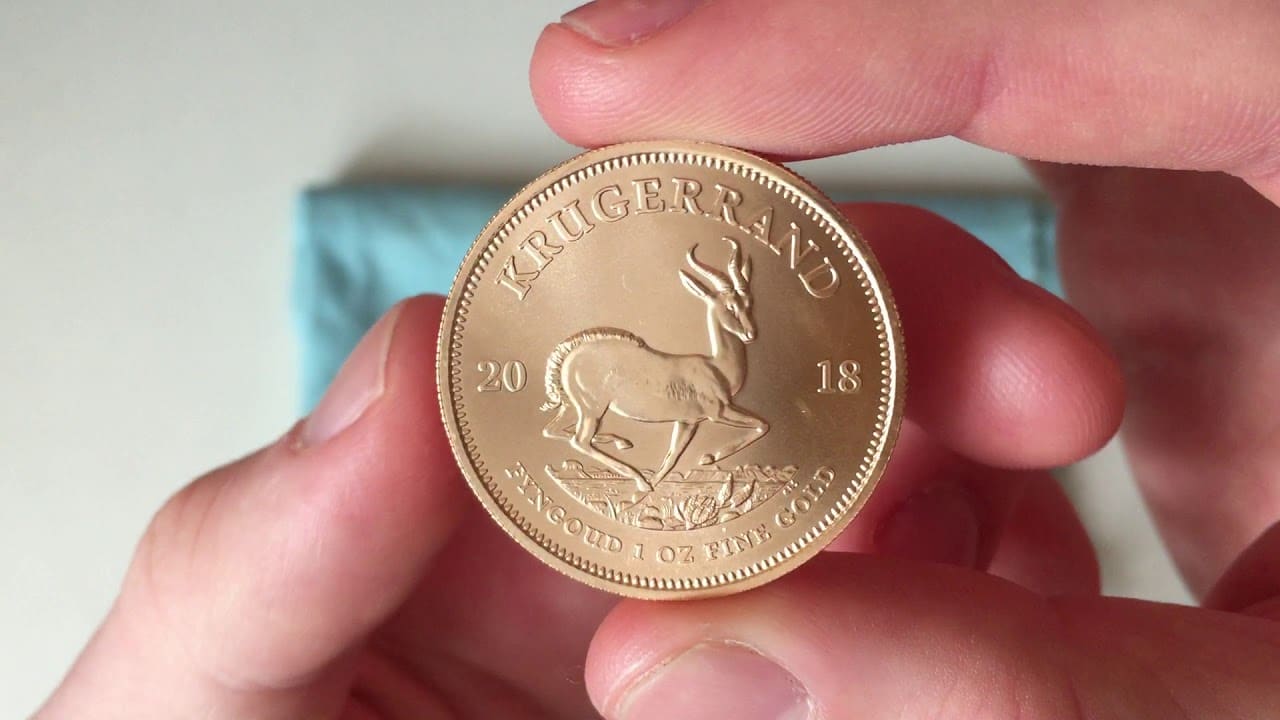
Genuine 1 oz Gold Krugerrand Specifications
Before you can spot a fake, you need to know exactly what a genuine coin is supposed to measure and contain. These figures are set by the South African Mint and have not changed since the coin’s launch. This makes them one of the most reliable checks you can use.
Weight and Composition
A genuine 1 oz gold Krugerrand has a total weight of 33.931g ± 0.05g. That figure is often misunderstood: it’s not the weight of the pure gold, it’s the weight of the whole coin. The coin is minted from a gold-copper alloy. It contains exactly one troy ounce (31.1035 g) of pure gold. Copper makes up the rest for added durability.
Dimensions
The coin measures 32.77mm ± 0.1mm in diameter and 2.84mm ± 0.1mm in thickness. Both figures are tightly controlled by the Mint, which makes an out-of-range measurement one of the fastest ways to disqualify a fake.
Purity
Krugerrands are struck in 22-karat gold: 91.67% gold and 8.33% copper. This isn’t a shortcut or a lower standard. It’s a deliberate design choice. It makes the coin much more durable than a 24-karat (pure gold) coin. Pure gold is soft enough to scratch and wear easily. The copper in a real gold Krugerrand gives it a distinctive orange-gold color. Pure gold looks paler and brighter yellow.
What a Real Gold Krugerrand Should Look Like
Once you know the numbers, the next check is simply looking closely. The Mint’s striking process creates crisp, consistent detail on every real coin. That sharp detail is one of the hardest things for counterfeiters to copy.
Obverse: The Paul Kruger Portrait
The obverse features a portrait of Paul Kruger, former President of the South African Republic. On a real coin, the beard and hair show fine, clear strands, not a blurred mass. The eyes also look sharp and clear. The surrounding lettering and date should be sharp-edged, not soft or slightly doubled.
Reverse: The Springbok
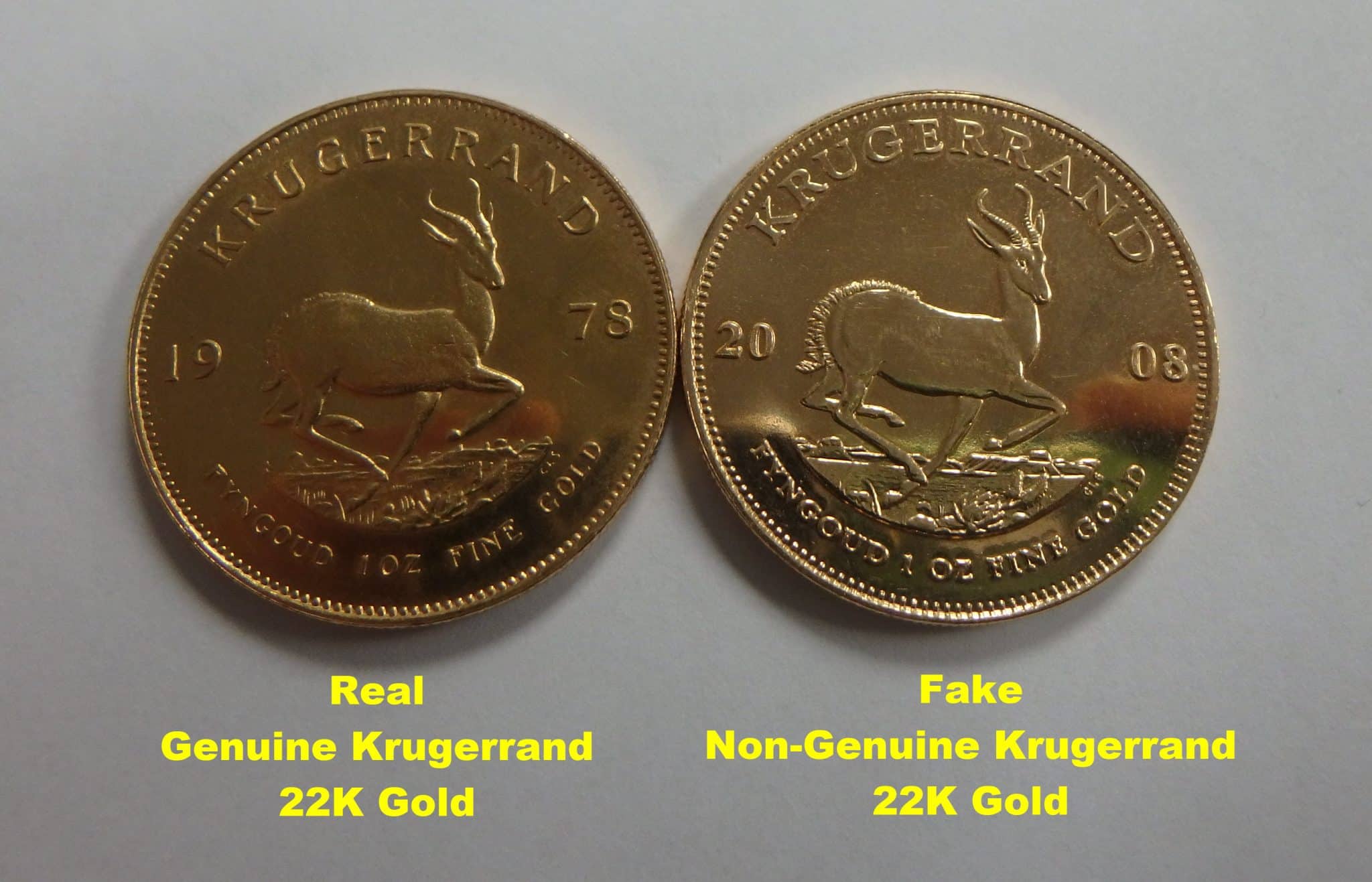
The reverse depicts a Springbok, South Africa’s national animal, alongside the words “FYNGOUD 1 OZ FINE GOLD.” Genuine coins show clear muscle definition through the body and legs, sharply pointed horns, and correctly proportioned hooves. Fakes frequently get this wrong: look out for bloated or misshapen hooves, blunted horns, or a flat, muscle-less silhouette.
The Edge
Run your finger and eye around the edge of the coin. A genuine gold Krugerrand has exactly 160 reeded serrations, evenly spaced around the full circumference, with no visible seam line. A seam, even a fine one, often means two halves of a hollow or filled fake were fused. It is one of the clearest signs on a coin you can find.
4 Types of Fake Gold Krugerrands
Not all fakes are made the same way, and knowing the common methods helps you understand why each test in this guide matters.
- Gold-Plated Base Metals: The core is made of copper, brass, or zinc, with only a thin outer layer of gold. These are the easiest fakes to catch. They fail weight, size, and edge tests almost at once. Base metals are much lighter and less dense than gold.
- Tungsten-Filled Core: These use a tungsten core. Tungsten is very dense, about 19.25 g/cm³. This is close to pure gold’s density, about 19.32 g/cm³. This lets them match the correct weight well. Weight checks alone won’t catch these. You need an acoustic ping test or an electronic analyser to expose them.
- Under-Karat Alloys: These are made from a lower-purity gold mix than the official 22-karat standard. The standard is 91.67% gold and 8.33% copper. This quietly lowers the coin’s real gold content. The coin still looks and feels mostly correct.
- Crude Low-Detail Replicas: Mass-produced stamped copies that miss key details. They show wrong Springbok horn shapes, bloated hooves, and a dull, patchy surface lustre. They lack the sharp, consistent finish of a genuine Mint strike.
The 8-Point Krugerrand Authentication Protocol
Work through these eight checks in order, and don’t stop early just because the first few pass. A well-made fake, particularly a tungsten-filled one, can pass a visual check and a weigh-in and still fail later steps.
1. Visual Inspection: Colour & Lustre
Start with colour. A genuine gold Krugerrand has a warm, orange-gold colour because it contains copper. It is not the paler, brighter yellow of pure gold or gold-plated metal. The surface lustre should be even and consistent across the whole coin, with no dull patches or discolouration. Avoid an unusually high shine, as it may suggest plating rather than a solid strike.
2. Visual Inspection: Design Details
Move on to the design itself. Check Paul Kruger’s portrait for sharp, clear beard and hair strands and well-rendered eyes. Check the Springbok for defined muscle, sharp horns, and correctly shaped hooves. Blurred, soft, or slightly misaligned detail on either side is one of the most common signs of a crude replica.
3. The Ping Test: Critical for Tungsten
Balance the coin on a fingertip and gently tap the edge with another coin or a small metal object. A genuine gold Krugerrand produces a clear, bell-like ring that sustains for a second or two before fading. A dull thud, a short clipped sound, or no ring is a strong warning sign. This test catches tungsten-filled fakes. Tungsten’s internal structure dampens the acoustic ring, even when the weight almost matches.
4. Weight Check
Weigh the coin on a calibrated scale accurate to at least 0.01g. It should read 33.931g ± 0.05g. Anything meaningfully outside that range rules the coin out immediately. Just remember that a well-made tungsten fake can pass this step, which is why weight should never be your only check.
5. Diameter & Thickness
Using digital callipers, measure diameter and thickness. Genuine coins measure 32.77mm ± 0.1mm across and 2.84mm ± 0.1mm thick. Even a slight deviation here can indicate a cast fake or a coin struck from incorrect dies.
6. Magnet Test
Hold a strong magnet close to the coin. Gold is not magnetic, so a genuine gold Krugerrand should show zero attraction: it won’t budge, cling, or drag. Any noticeable pull toward the magnet means the coin contains ferrous material and is not genuine. Note that this test won’t catch every fake on its own, since tungsten and several other counterfeit metals are also non-magnetic.
7. Edge Examination: The Seam Test
Examine the edge closely, ideally under good light or magnification. Count the reeded serrations if you can: there should be 160 of them, evenly spaced. Then look specifically for a seam line running around the circumference. A seam is a strong sign of a hollow or filled fake. Genuine coins are struck from one solid blank.
8. Source & Provenance
Finally, consider where the coin came from. A clear chain of ownership, a reputable dealer, or a documented sale history all add confidence. Be cautious with coins bought from unverified private sellers, cash-only meetups, or online marketplaces with no return policy. Provenance can’t confirm authenticity by itself. But if a seller can’t or won’t explain a coin’s origin, slow down. Test the coin more carefully.
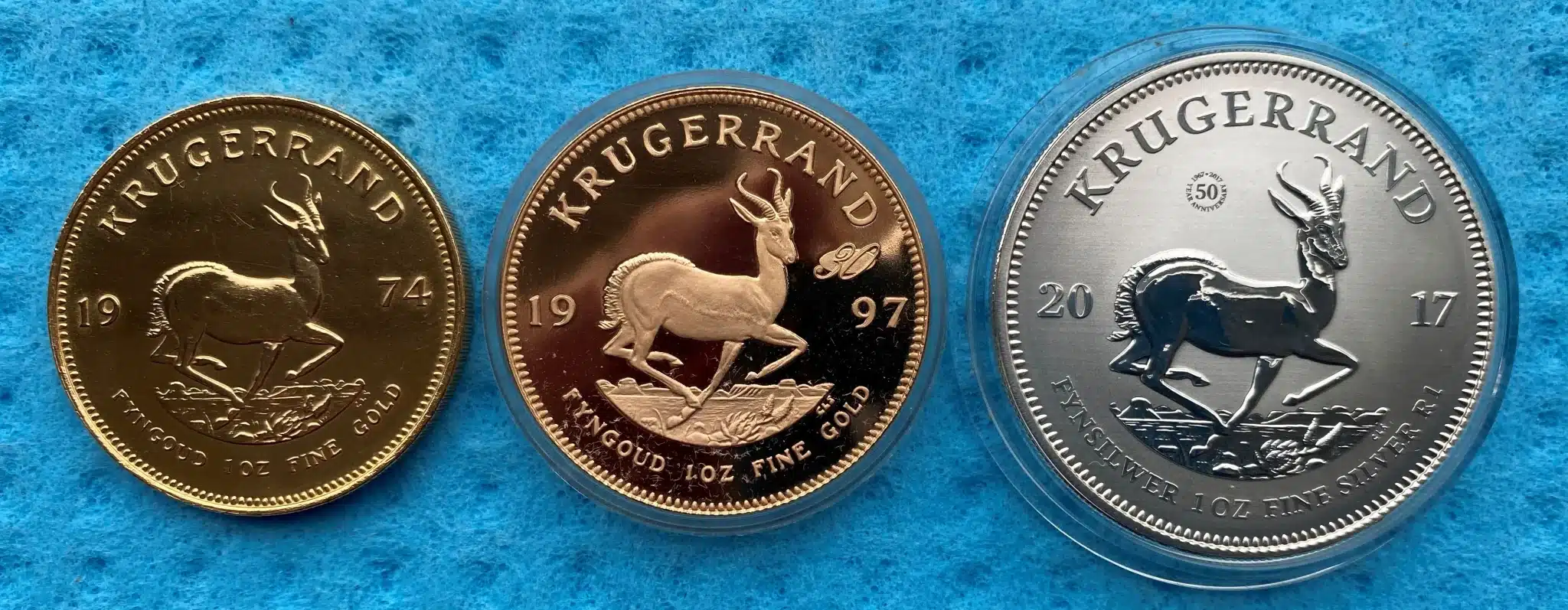
Advanced Verification Methods
For high-value deals, big collections, or any coin that still seems doubtful after the checks above, these expert methods add more certainty.
Specific Gravity Test
This test measures density by weighing a coin in air and then in water, then calculating the ratio between the two. Because gold has a specific density, this method can catch fakes, including some tungsten-filled ones. These fakes may pass a simple weight check. However, it needs precise equipment and a steady hand for accurate results..
XRF Scanning
X-ray fluorescence (XRF) analysers measure the elemental composition of a coin’s surface in seconds, without damaging it. This is the standard tool used by professional dealers and refiners to confirm gold purity and detect plating. It is widely seen as one of the fastest and most reliable non-destructive tests.
Professional Assay
For full certainty, especially with high-value coins or full collections, get a professional assay. Use an accredited refiner or bullion dealer for the final word. This typically combines several methods, like XRF and specific gravity. These tests follow the standards in the LBMA Good Delivery and assaying guidelines. They produce documented, verifiable results you can trust for insurance, resale, or probate.
Red Flags That Should Stop You in Your Tracks
Some warning signs are worth acting on immediately, before you even reach for a scale or a magnet:
- A price below the current spot price. Genuine gold Krugerrands carry a premium over spot to cover minting and dealer margin; they are never sold below it.
- A seller who refuses to let you weigh, measure, or test the coin before you pay.
- Pressure to decide quickly, meet in an unusual location, or pay in cash only with no receipt or invoice.
- No return policy or willingness to provide one, especially from a private or online marketplace seller.
- Visibly blurred design details, a rough or uneven edge, or any visible seam line.
- A seller who can’t answer basic questions about the coin’s origin, year, or condition.
Quick Authentication Checklist
Keep this checklist handy for a fast, at-a-glance verification:
- Weight: 33.931g ± 0.05g
- Diameter: 32.77mm ± 0.1mm
- Thickness: 2.84mm ± 0.1mm
- Colour: Orange-gold (22K), not yellow
- Magnet: Zero attraction
- Ping: Clear ring, 1-2+ second sustain
- Kruger: Sharp beard detail, clear eyes
- Springbok: Muscle definition, sharp horns
- Edge: 160 serrations, no seam line
- Price: Premiums 3-6% over spot (never below)
Only Buy from Professional Dealers
The most reliable authentication step of all happens before you ever run a test: choosing who you buy from. A trusted dealer checks every coin before it reaches you. They stand behind each sale. They also give you a clear contact person if you need to confirm authenticity later.
At Bullion Traders, every gold Krugerrand we sell is checked for weight, size, and purity. It is listed with clear, market-linked pricing. We also offer secure, insured delivery across South Africa.
If you are ready to buy with confidence, browse our Gold Krugerrands for sale. You can also read our guide on buying Gold Krugerrands. And if you’re not sure about a coin you already own, get in touch. We’re happy to help you verify it.