 1st Floor,
Willowbridge Centre,
Carl Cronje Drive,
Tyger Valley
1st Floor,
Willowbridge Centre,
Carl Cronje Drive,
Tyger Valley



- MetCon Silver Kilobar
Where to Buy Gold Bullion in South Africa


Buying gold bullion in South Africa should be simple. In reality, most serious buyers pause for the same reasons. They do not want to buy gold bullion from the wrong dealer, pay an unclear premium, or end up with a product that is awkward to sell later.
That caution is sensible.
If you are already considering physical gold, the question is usually not whether gold belongs in your portfolio. It is where to buy it safely, how to compare your options properly, and what to look for in a dealer before you part with your money.
This guide is written for that point in the decision. It is not a beginner’s explanation of gold. It is a practical guide on how to buy gold bullion in South Africa with more confidence, less noise, and fewer avoidable mistakes.

Common Ways to Buy Gold Bullion in South Africa
South African buyers usually come across four main routes: banks, online bullion dealers, coin shops, and private sellers. Each has its place, but none offers the same level of flexibility, pricing clarity, or resale support.
Banks
Banks appeal to buyers who want the reassurance of a formal institution. That sense of structure can matter, especially on a first purchase.
The drawback is that banks are not always built around specialist bullion buying. The product range may be limited, the process may feel less flexible, and the experience may not always be designed around ongoing ownership and resale.
Pros
- Strong institutional trust
- Familiar buying environment
- Structured processes
Cons
- Narrower product range
- Less specialist bullion guidance
- Not always the most practical route for repeat buyers
Online bullion dealers
For many serious retail buyers, this is the most practical route.
A good online bullion dealer makes it easy to compare products, review pricing, check availability, and understand how delivery works before committing. The advantage is not only convenience. It is clarity.
The important distinction is dealer quality. A reputable online dealer should be easy to verify, clear about product details, and transparent about both buying and selling. A weak one usually becomes vague where trust matters most.
Pros
- Wider range of gold coins and bars
- Easier product comparison
- More convenient ordering process
- Often a stronger specialist focus
Cons
- Requires proper vetting
- Not every website is a credible bullion business
- Buyers need to check fulfilment and security standards carefully
Coin shops
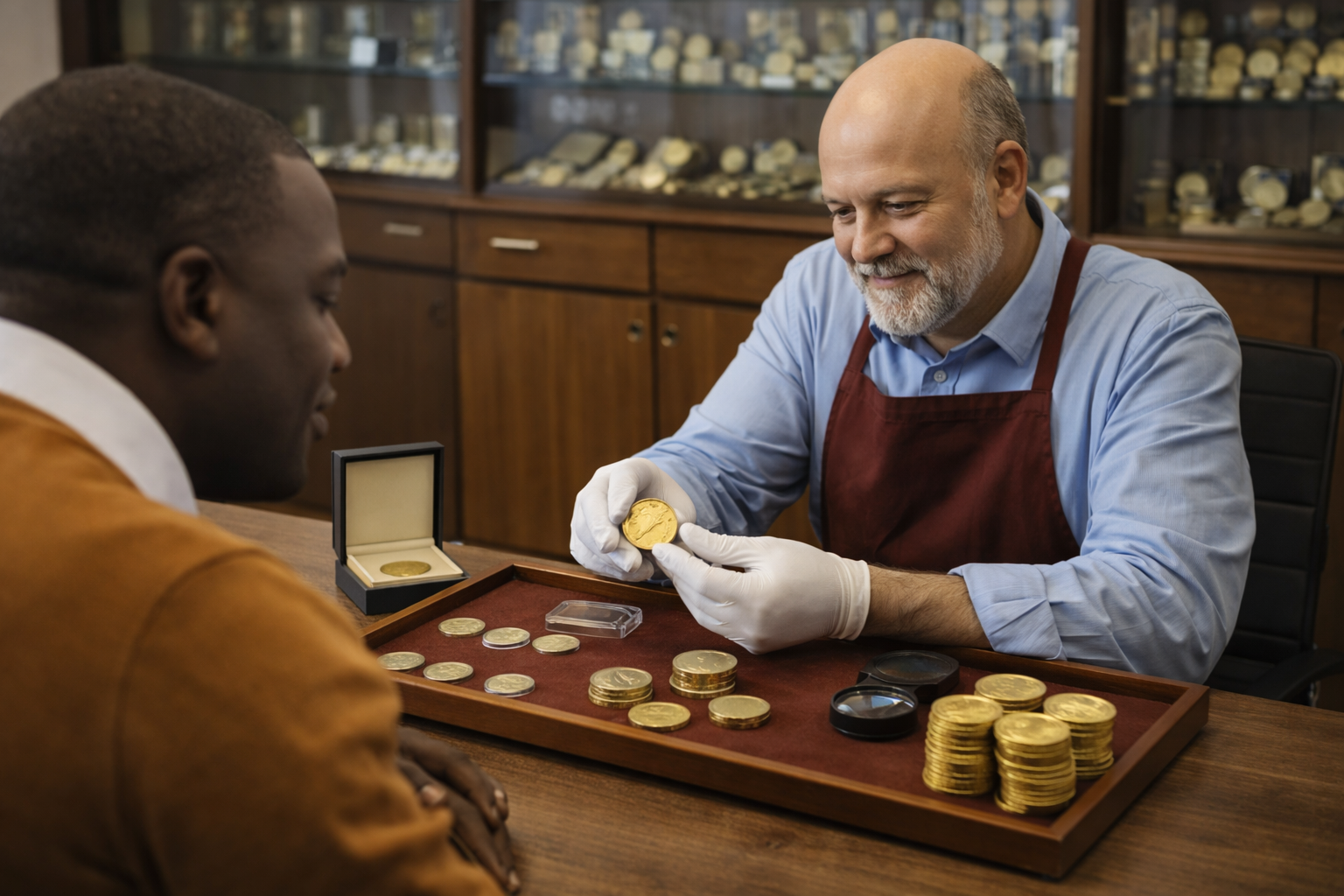
Coin shops can work well for buyers who prefer face-to-face interaction and want to inspect products in person before buying.
That said, not every coin shop is primarily a bullion business. Some focus more on collectables than investment-grade bullion, and pricing or stock depth can vary significantly.
Pros
- In-person reassurance
- Direct inspection of products
- Useful for buyers who prefer physical interaction
Cons
- Range may be limited
- May lean more toward collectables than bullion
- Pricing can differ widely between shops
Private sellers
This is usually the highest-risk option.
A private seller may look attractive if the asking price seems lower, but the burden of authenticity, safety, and fair pricing shifts heavily onto the buyer. There is also no structured buyback relationship if you want to sell later.
Pros
- Direct negotiation
- Can appear cheaper upfront
Cons
- Higher counterfeit risk
- Less transparency
- Personal security concerns
- No formal support after the transaction

What to Look for in a Gold Bullion Dealer
This is the section that matters most.
A gold dealer should not be judged only by whether they have stock today. The stronger question is whether they still look credible when you assess legitimacy, pricing, authenticity, fulfilment, and resale support together.
A real business presence
A serious bullion dealer should be easy to verify.
That means a clear physical address, working contact details, and a business that explains who it is and how it operates. Bullion Traders, for example, states publicly that it is a South African precious metals dealer founded in 2020 and based in Cape Town, serving clients through both its online platform and direct service.
If a seller is difficult to verify before payment, that is already useful information.
Transparent pricing
Gold buyers do not need gimmicks. They need pricing they can understand.
A credible dealer should describe the product clearly, explain what is being sold, and avoid pricing that feels vague or deliberately difficult to compare. Transparent pricing is especially important when comparing Krugerrands with bars, or one dealer against another.
Bullion Traders describes its product and buyback pricing as market-related, which is the sort of straightforward language buyers should expect from a dealer handling physical bullion.
A visible buyback route
Buying bullion is only one side of the decision.
If you are purchasing physical gold now, you should also understand how resale would work later. Does the dealer buy back bullion? Is the process visible on the site? Is it treated as a normal part of ownership?
Bullion Traders’ sell page explicitly positions liquidity as part of bullion ownership and states that it offers a straightforward service for individuals looking to sell gold and silver bullion at transparent, market-related prices.
That matters because resale should not feel like a separate problem you solve later.
Product authenticity and recognised bullion
Authenticity starts with the dealer, but product choice matters too.
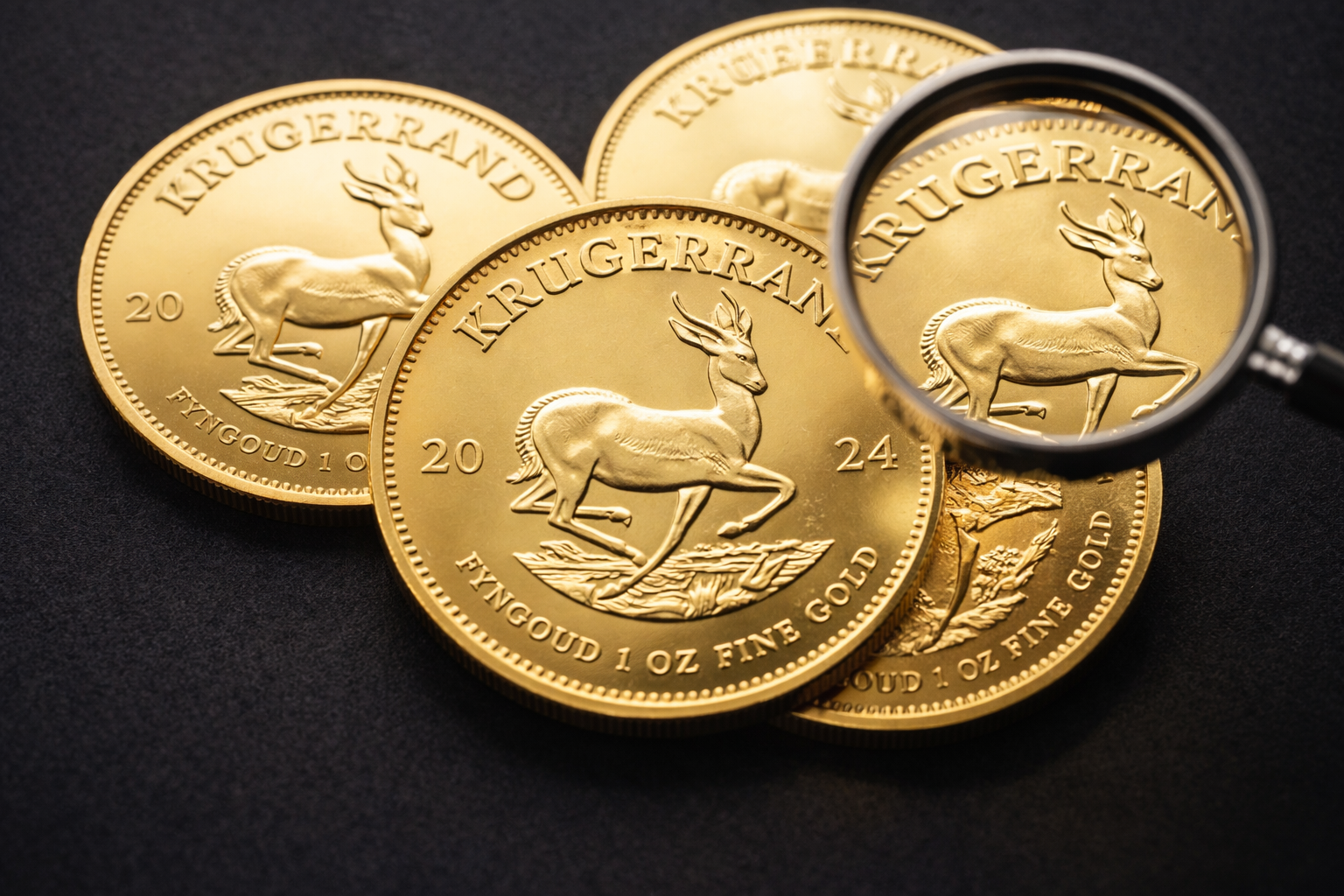
Recognised bullion products are usually easier to understand, verify, and sell later than obscure items. On its Gold Krugerrand category page, Bullion Traders describes Krugerrands as one of the world’s most recognised and widely traded gold bullion coins, which is exactly why they remain so central to South African retail buying.
Delivery, insurance, and security
For online purchases, logistics are part of the product.
South African Mint’s public bullion process is a useful reminder of how procedural serious bullion buying should be: quoted pricing, EFT payment, proof of payment, KYC requirements, ID checks, and controlled collection.
A private dealer does not need to follow that exact model, but it should make delivery, insurance, and handover standards clear enough that a buyer knows the transaction is being handled properly.
Buying Gold Coins vs Gold Bars
For most buyers, the practical choice comes down to coins, especially Krugerrands, versus bars.
Gold coins
Gold coins are often the easier starting point for private buyers.
They are familiar, widely recognised, and generally easier to compare across dealers. In South Africa, Krugerrands also carry strong local recognition, which helps at both purchase and resale stage. If resale flexibility and product familiarity matter most, many buyers begin by looking at Gold Krugerrands.
Coins can also make sense if you want more flexibility in unit size or prefer building your position gradually.

Gold bars
Gold bars appeal to buyers who want a more direct bullion format and are primarily focused on weight and purity.
They can be a strong option, particularly for larger purchases, but resale flexibility can vary more depending on the size and type of bar. Buyers comparing this route should review a dedicated gold bars range rather than treating all bars as interchangeable.
Which is better?
There is no universal answer.
If simplicity, liquidity, and easy recognition matter most, coins are usually the easier place to start. If format efficiency and larger allocations matter more, bars can make strong sense. The better choice depends on how you expect to buy, hold, and eventually sell.
Buying Gold Online vs In-Person
Both routes can work. The difference is not the channel. It is the dealer.
Buying online
Buying online makes sense when the dealer is established, product information is clear, and the fulfilment process is explained properly. It is often the easiest way to compare options without pressure.
Before buying online, check:
- the dealer’s physical address and contact details
- the clarity of product descriptions
- delivery, insurance, and tracking information
- whether the business also supports resale
Buying in person
Buying in person may suit a first-time buyer who wants extra reassurance before committing, or someone who prefers direct interaction and collection.
The trade-off is convenience. In-person buying can take longer and the available product range may be narrower.
Which is safer?
Online buying is not automatically less safe. A poor dealer is the risk, not the format itself.
A credible online bullion dealer with a visible local presence, recognised products, and a clear resale process is often a safer choice than an informal in-person transaction with limited transparency.
A Note on Buying Gold from Local Dealers
A local South African bullion dealer can offer a useful balance of convenience, accountability, and market familiarity.
That matters because physical gold is not a generic online purchase. Buyers want to know that the dealer understands the local market, supplies recognised products, and can support the full ownership cycle, not just the first transaction.
Bullion Traders is a useful example of that local model. Its public site presents the business as a Cape Town-based South African bullion dealer with online ordering, recognised bullion products, and a dedicated sell-back section.
For a buyer comparing options, that means you can review the business on the About page, compare Gold Krugerrands and gold bars, and understand how selling bullion back later would work.
That is usually what serious buyers are looking for. Not hype. Just clarity.
Frequently Asked Questions
Is it legal to buy gold bullion in South Africa?
Yes. Bullion is bought and sold openly in South Africa through established dealers and official channels. South African Mint publicly sets out procedures for both buying from and selling legal tender gold coins to the public.
Are Krugerrands VAT-free?
Gold and silver do not always receive the same VAT treatment, which is one reason buyers should confirm the exact product treatment before purchasing. SARS states that VAT is generally levied at the standard 15% rate unless a supply is zero-rated or exempt, and SARS rulings specifically identify Krugerrands among South African legal-tender gold coins in VAT guidance.
Can I sell gold bullion easily later?
Usually yes, but resale ease depends on what you bought and who you bought it from. Recognised products and a dealer with a visible buyback process generally make that easier. Bullion Traders explicitly frames liquidity and sell-back support as part of bullion ownership.
How do I know gold is authentic?
Start with the dealer. A credible bullion dealer should be transparent about product type, sourcing, and process. Recognised bullion products are also generally easier to verify and resell than obscure items. Bullion Traders states that its products are sourced from reputable suppliers and that it maintains standards to ensure authenticity and quality.
Conclusion
Where you buy gold bullion in South Africa matters as much as what you buy.
The strongest choice is usually the dealer who is easiest to verify, clearest about pricing, serious about authenticity, and able to support both resale and purchase. Once those basics are in place, the decision between Krugerrands and bars becomes much simpler.For buyers who are already close to purchasing, that is the real filter. Review the dealer, the product, and the resale path, then move on to comparing the available gold options with more confidence.